Pope County Dog Registration Information
Service Dogs and Emotional Support Animals in Pope, Minnesota
If you’re asking where do I register my dog in Pope County, Minnesota for my service dog or emotional support dog, the key thing to know is this: dog licensing (registration) is usually handled by your local city or township—not by a single county-wide “service dog registry.”
In other words, the paperwork you may need for a dog license in Pope County, Minnesota is typically the same whether your dog is a pet, a working dog, a service animal, or an emotional support animal (ESA). What changes is the legal status of the animal—and the rules that apply in housing and public access situations.
Where to Register or License Your Dog in Pope County, Minnesota
Because licensing is often handled locally, below are examples of official offices within Pope County, Minnesota that residents commonly contact for dog licensing, animal control questions, rabies enforcement issues, or related local ordinance enforcement. If you’re unsure which office applies, start with your city office (if you live in city limits) or the Pope County Sheriff’s Office for county-level animal control direction.
City of Starbuck (City Office)
Address:
307 East 5th Street
PO Box 606
Starbuck, MN 56381
Phone: 320-239-2525
Email: dcstarbuck@hcinet.net
Email: deputyclerk@hcinet.net
Office hours: Monday–Friday, 7:30 a.m. – 4:30 p.m.
City of Glenwood (City Office / City Hall)
Address:
100 17th Avenue NW
Glenwood, MN 56334
Phone: 320-634-5433
Email: cog@ci.glenwood.mn.us
Office hours: Weekdays, 8 a.m. – 4 p.m.
Pope County Sheriff’s Office (Animal Control / Enforcement)
Address:
130 E. Minnesota Avenue
Glenwood, MN 56334
Main courthouse line (business hours): 320-634-7700
Non-emergency law enforcement (anytime): 320-634-5411
Office hours: Monday–Friday, 8:00 a.m. – 4:30 p.m.
Overview of Dog Licensing in Pope County, Minnesota
A local dog license is typically a city-issued or township-issued registration that connects your dog to you as the owner, confirms basic compliance (especially rabies vaccination), and supports local animal control services. If you’re searching for a dog license in Pope County, Minnesota, you should expect the rules and fees to vary depending on where you live.
Dog licensing vs. “registering” a service dog or emotional support dog
Many people use “register” to mean different things. In practice, there are three separate concepts:
- Dog license (local registration): A local government license/tag process for dogs living in a city or county area.
- Service dog legal status: A disability-related designation defined by law, based on training to perform specific tasks for a person with a disability.
- Emotional support animal (ESA): Generally a housing-related accommodation category (not the same as a service dog), usually supported by disability-related documentation from a qualified professional.
Even if your dog is a service dog or ESA, you may still need the same local license you would need for any other dog—because licensing focuses on public health and identification, not on disability accommodations.
Rabies vaccination requirements (why licensing offices ask for proof)
Local dog licensing systems commonly require rabies vaccination proof as part of the application. Cities may require a current rabies certificate before issuing a license and tag. For example, Glenwood’s animal licensing rules describe that a license application must be accompanied by a veterinarian certificate showing rabies vaccination, and that licensing is required for dogs over a specified age threshold. These local requirements support public health and can also affect how bite incidents are handled.
How Dog Licensing Works Locally in Pope County, Minnesota
To answer where to register a dog in Pope County, Minnesota accurately, you need to identify your local jurisdiction: city limits (like Glenwood or Starbuck) versus an unincorporated area of Pope County. Your “right office” is usually the one that provides local ordinance administration and animal control coordination for your address.
Step-by-step: a practical licensing checklist
- Confirm your jurisdiction: Are you in a city (Glenwood, Starbuck, etc.) or outside city limits? City residents usually license through their city office.
- Get rabies vaccination proof: Most licensing programs require a rabies certificate from a veterinarian.
- Contact the local office: Ask how to apply, what fees apply, and whether there are deadlines, renewals, or tags required on the collar.
- Keep records: Save your license/tag number and your rabies certificate in case you need them for housing, travel, or a lost dog situation.
City licensing example: Glenwood
Glenwood’s local ordinance framework includes a requirement that dogs above a certain age be licensed through the City Administrator, with applications made on city forms. It also describes rabies vaccination documentation as part of the licensing process and indicates that licensed dogs must wear the tag on a collar. This is a common model across Minnesota cities and is a good example of how “registering your dog” is usually a local city function rather than a county-level service-dog program.
County role: animal control authority and enforcement
When you live outside city limits (or when an issue involves enforcement across the county), county-level authorities may be involved. Pope County ordinances and enforcement structures can designate the Sheriff as an animal control authority for certain issues (for example, at-large or dangerous dog enforcement and related processes). If you’re unsure where your dog should be licensed—or you have a bite incident, quarantine question, or “running at large” issue—the Sheriff’s Office is a practical starting point to ask where the matter should be handled.
Service Dog Laws in Pope County, Minnesota
A service dog is not created by a local license, a badge, or an online registration. A dog becomes a service dog under applicable law when it is individually trained to do work or perform tasks for a person with a disability. The important practical takeaway for Pope County residents is: your local dog license and the dog’s service-dog status are separate.
What a service dog is (and is not)
- Is: A dog trained to perform specific disability-related tasks (for example, guiding, alerting, retrieving, interrupting a harmful behavior, or other trained work).
- Is not: A dog that only provides comfort by its presence (that category typically fits ESA rules instead).
- Is not: A status granted by a certificate purchased online.
Do service dogs need a dog license in Pope County, Minnesota?
Often, yes. A service dog may still need to be licensed like any other dog where local ordinances require it. If you need an animal control dog license Pope County, Minnesota answer specific to your address, contact the office that issues licenses in your jurisdiction and ask: (1) whether licensing is required, (2) what documentation is required (commonly rabies proof), and (3) whether any fee waivers exist locally (if any).
Emotional Support Animal Rules in Pope County, Minnesota
An emotional support animal (ESA) is generally a concept that comes up most often in housing. ESAs are not the same as service dogs, and they do not automatically have the same public-access rights as service dogs. However, in many housing contexts, ESAs may be considered as a reasonable accommodation related to a disability, depending on the situation and documentation.
ESA status does not replace local licensing
If your city or local jurisdiction requires a dog license, ESA status typically does not remove that requirement. You may still need to comply with: local dog licensing rules, rabies vaccination requirements, leash rules, and nuisance regulations. In practical terms: if you’re trying to figure out where to register a dog in Pope County, Minnesota for an ESA, you’re usually still looking for the same licensing office you’d use for any dog—your city office (if within city limits) or the appropriate local authority for your area.
Avoid confusing ESA documentation with “registration” websites
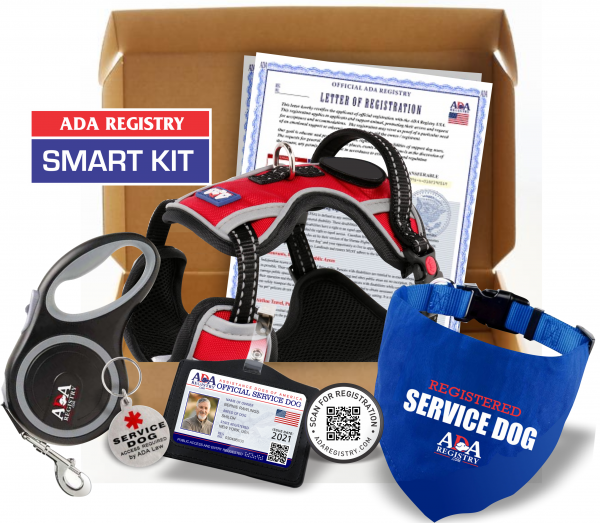
Many people encounter third-party “ESA registration” or “service dog registry” sites online. These are not the same as local licensing, and they are not the office you contact to obtain a legal dog license in Pope County, Minnesota. If you’re dealing with housing paperwork, focus on what your housing provider requests and what disability-related documentation is appropriate—while separately keeping your dog’s rabies vaccination and local license current.
Frequently Asked Questions
Where do I register my dog in Pope County, Minnesota for my service dog or emotional support dog?
Start with your local city office if you live inside city limits (for example, Glenwood or Starbuck). If you live outside city limits or you’re unsure who handles enforcement, contact the Pope County Sheriff’s Office for direction. Remember: local dog licensing is separate from service dog or ESA status.
Is there a Pope County service dog registry I have to use?
Typically, no. Service-dog status is generally based on disability and training, not on county registration. What you likely still need is a local dog license (if required where you live) and proof of rabies vaccination.
Do I need proof of rabies vaccination to get a local dog license?
Often, yes. Local licensing rules commonly require a veterinarian certificate showing rabies vaccination before a city issues a license and tag. Requirements can vary by jurisdiction, so confirm with your city office.
What’s the difference between a dog license and a service dog?
A dog license is a local registration/tag and compliance system (often tied to rabies vaccination and identification). A service dog is a dog trained to perform tasks for a person with a disability. You can have one without the other—although many places require both (service dog status for access/accommodation purposes, and local dog licensing for compliance).
What’s the difference between a service dog and an emotional support animal?
A service dog is task-trained for a disability. An ESA generally provides emotional support and is most often relevant in housing contexts. ESAs are not the same as service dogs, and they typically do not have the same public access rights as a service dog.
What You May Need
- rabies vaccination proof
- identification
- proof of residency
- licensing fee
Quick Tips for Pope County Residents
- If you live in city limits, contact your city office first for dog licensing.
- Ask whether your dog must wear the license tag on a collar.
- Keep a copy of your rabies certificate with your important records.
- Service dog and ESA status are separate from local dog licensing requirements.
Register A Dog In Other Minnesota Counties
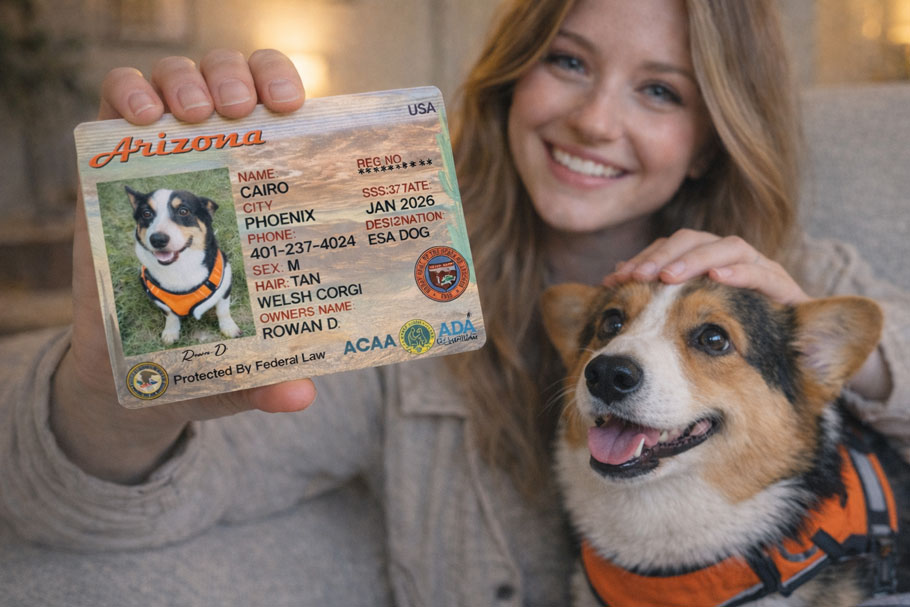
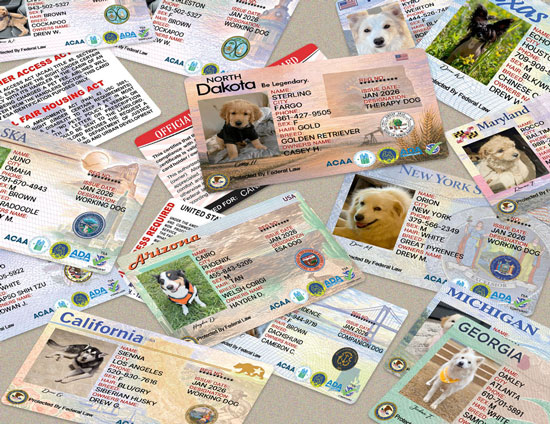
Select your county below to get started with your dog’s ID card. Requirements and license designs may vary by county, so choose your location to see the correct options and complete your pup’s registration.
- Aitkin County Dog Registration
- Anoka County Dog Registration
- Becker County Dog Registration
- Beltrami County Dog Registration
- Benton County Dog Registration
- Big Stone County Dog Registration
- Blue Earth County Dog Registration
- Brown County Dog Registration
- Carlton County Dog Registration
- Carver County Dog Registration
- Cass County Dog Registration
- Chippewa County Dog Registration
- Chisago County Dog Registration
- Clay County Dog Registration
- Clearwater County Dog Registration
- Cook County Dog Registration
- Cottonwood County Dog Registration
- Crow Wing County Dog Registration
- Dakota County Dog Registration
- Dodge County Dog Registration
- Douglas County Dog Registration
- Faribault County Dog Registration
- Fillmore County Dog Registration
- Freeborn County Dog Registration
- Goodhue County Dog Registration
- Grant County Dog Registration
- Hennepin County Dog Registration
- Houston County Dog Registration
- Hubbard County Dog Registration
- Isanti County Dog Registration
- Itasca County Dog Registration
- Jackson County Dog Registration
- Kanabec County Dog Registration
- Kandiyohi County Dog Registration
- Kittson County Dog Registration
- Koochiching County Dog Registration
- Lac qui Parle County Dog Registration
- Lake County Dog Registration
- Lake of the Woods County Dog Registration
- LeSueur County Dog Registration
- Lincoln County Dog Registration
- Lyon County Dog Registration
- Mahnomen County Dog Registration
- Marshall County Dog Registration
- Martin County Dog Registration
- McLeod County Dog Registration
- Meeker County Dog Registration
- Mille Lacs County Dog Registration
- Morrison County Dog Registration
- Mower County Dog Registration
- Murray County Dog Registration
- Nicollet County Dog Registration
- Nobles County Dog Registration
- Norman County Dog Registration
- Olmsted County Dog Registration
- Otter Tail County Dog Registration
- Pennington County Dog Registration
- Pine County Dog Registration
- Pipestone County Dog Registration
- Polk County Dog Registration
- Ramsey County Dog Registration
- Red Lake County Dog Registration
- Redwood County Dog Registration
- Renville County Dog Registration
- Rice County Dog Registration
- Rock County Dog Registration
- Roseau County Dog Registration
- Scott County Dog Registration
- Sherburne County Dog Registration
- Sibley County Dog Registration
- St. Louis County Dog Registration
- Stearns County Dog Registration
- Steele County Dog Registration
- Stevens County Dog Registration
- Swift County Dog Registration
- Todd County Dog Registration
- Traverse County Dog Registration
- Wabasha County Dog Registration
- Wadena County Dog Registration
- Waseca County Dog Registration
- Washington County Dog Registration
- Watonwan County Dog Registration
- Wilkin County Dog Registration
- Winona County Dog Registration
- Wright County Dog Registration
- Yellow Medicine County Dog Registration